
The Proud Aster shares practical, down-to-earth guidance on uk gardening, plants and seasonal flower growing for readers across the UK.
- 0123456789
- Angle Bd Abdelmoumen & rue soumaya, Résidence
- [email protected]
The Proud Aster shares practical, down-to-earth guidance on uk gardening, plants and seasonal flower growing for readers across the UK.
 By Oliver Bennett
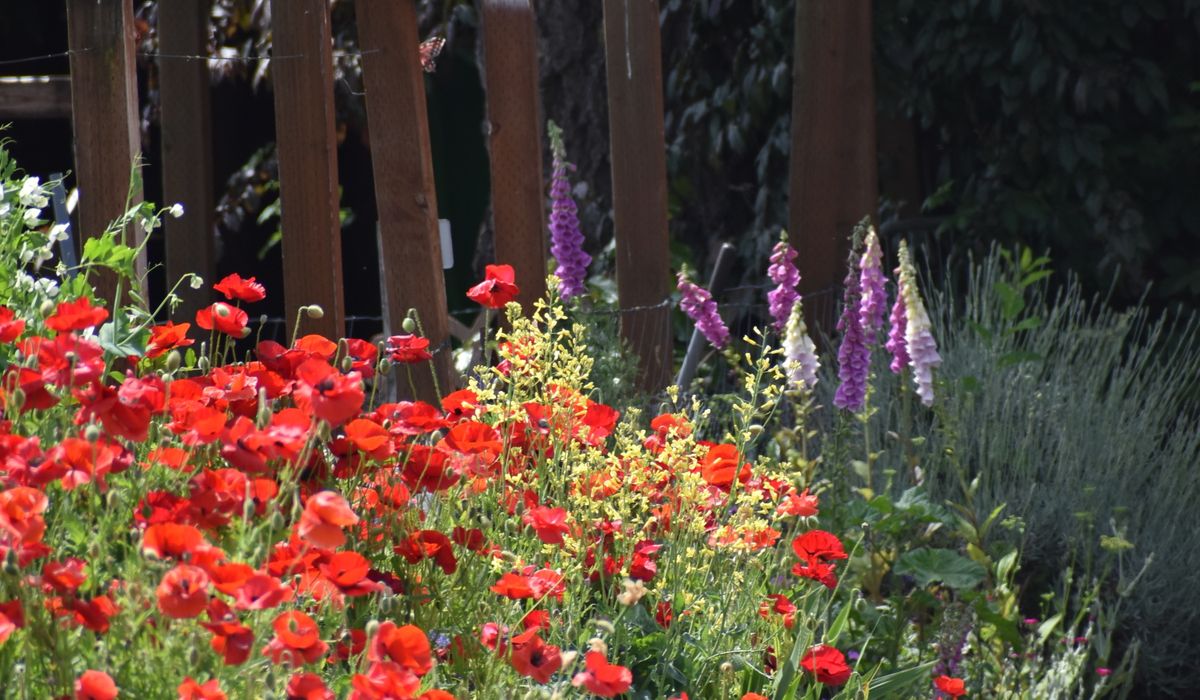
Most suburban borders are planted for one glorious fortnight in July, then left to sulk for the rest of the year. Bees cannot work with that. A queen bumblebee emerging in March needs food straight away, and a solitary bee provisioning nest cells in September needs it just as badly. The gap in the middle — that flat patch in late June when the spring bulbs have gone over and the dahlias have not yet started — is where most gardens quietly fail.
The good news is that a border three or four metres long, planted with a bit of thought, can feed a surprising number of bees from February through to November. You do not need a meadow, a wildflower strip or an acre of space. You need the right plants, in the right quantities, arranged so a bee can actually find them.
Bees forage by sight and scent, and they are far more conservative than you might expect. A single lavender marooned in the middle of bare soil will be visited, but grudgingly. Six lavenders together, forming a block of colour and scent a metre across, will be worked over all day long.
Aim for drifts: groups of three, five or seven of the same plant, repeated around the border rather than dotted about one by one.
The single most useful rule in bee-friendly planting: choose single, open flowers. Double flowers — the ones bred with petal upon petal, like so many bedding geraniums and busy Lizzies — have largely lost their stamens and nectaries along the way. There is often simply nothing for a bee to collect, however pretty they look to us.
Different bees have different tongue lengths, so a mix of flower shapes helps everyone:
Most culinary herbs qualify. If you are choosing between a frilly pelargonium and a pot of oregano, the oregano wins every time.
If your border currently has only one good month in it, work from this list and stretch the season at both ends.
Leave the seed heads on the sedums and asters over winter. They feed the birds and look superb rimed with frost.
A bee-friendly border is a slightly relaxed border, but it is not an untidy one. A few simple habits make a real difference.
Do all of this and your border becomes more than a pretty view from the kitchen window. It becomes a reliable, season-long larder — and you will notice the hum of it long before you notice anything else.


We are not gonna make spamming
